Todd Works
Music Frame
“If music be the food of love, play on; Give me excess of it” — William Shakespeare, Twelfth Night
The Setup
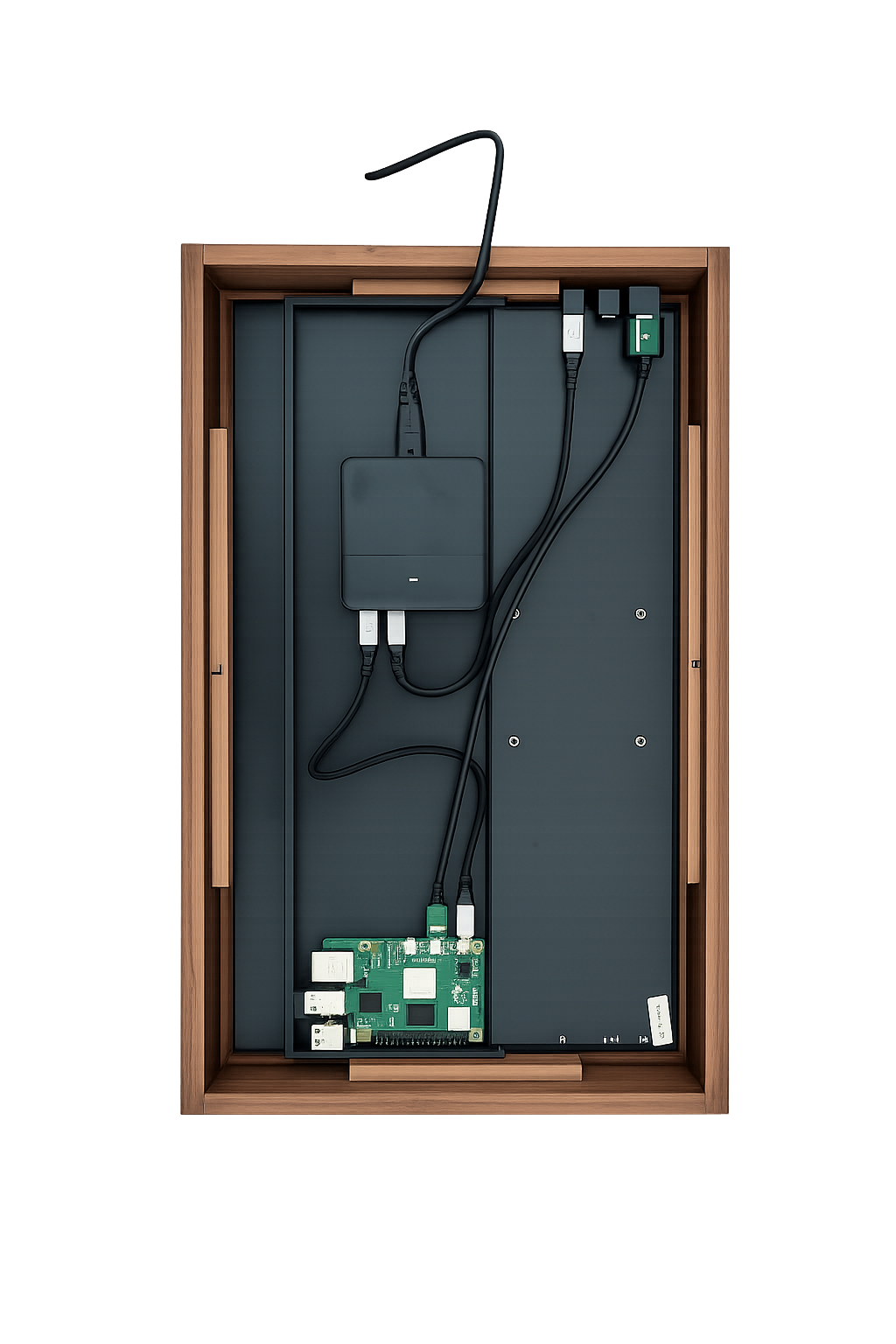
The frame is built around a Raspberry Pi 5 attached to a 120hz monitor that is enclosed by a custom walnut frame cut by my father. The Frontend is hosted on Vercel and the backend runs on Render for a total cost of $0. Currently, I am under powering the Pi at only 15 watts with 3 amps being the bottleneck. The Pi5 technically calls for 25 watts to power it. This limitation is due to the PD splitter that I am using to power the monitor and Pi at the same time. I value aesthetics over performance and the overall performance of the Pi is negligible with the current workflow.
The Flow
When the Frame turns on, it immediately displays a QR code for users to scan. The QR code takes the user to a login page on their phone where they can connect to their Spotify account. After logging into Spotify successfully, the frame switches to a screen that reads "Connecting to Spotify". Upon successful connection a blank CD will appear if a user is not actively listening to music. If they are listening to a song on Spotify then they will see the CD with the album art of that song slide up from the bottom and begin to spin with the title and artist fading onto the screen on the bottom.
The Point
I wanted to explore a physical way to experience digital music. Vinyl records and turntables have become popular again because people like having something tangible to look at, collect, and talk about. For years record collections have acted as a conversation piece in peoples homes. It’s hard to replicate that feeling with a music streaming service, but this was my attempt.